
Your face can easily give away your age because signs of aging tend to be most visible there. Fine lines, wrinkles, and sagging skin do not have to be a problem when you undergo a facelift at Carp Cosmetic Surgery Center. Headed by Dr. Steven Carp, this Uniontown and Beachwood, OH clinics is proud to offer facelifts, including the deep plane facelift, to residents of Canton, Akron, Cleveland, and the surrounding areas.
How a Facelift Addresses Signs of Aging
Sun damage, stress, and heredity all affect how you age, especially your face. You may notice that your cheeks aren't as full, and your jawline now appears puffy. Tiny lines and wrinkles appear almost overnight around your eyes, and you now have deep creases from your nose to your lips. Many signs of aging are caused by sagging skin, lax muscles, and fat that moves to other areas of your face. Facelift surgery addresses all of these problems to give you a natural and refreshed appearance. A facelift, also called a rhytidectomy, is a procedure that lifts and repositions facial tissues to reduce visible signs of aging.
Understanding how a facelift can improve your appearance is an important part of your decision to undergo surgery. The following information provides some general insight about the procedure. The best way to learn if a facelift is right for you is to schedule a consultation with Dr. Steven Carp of Carp Cosmetic Surgery Center.
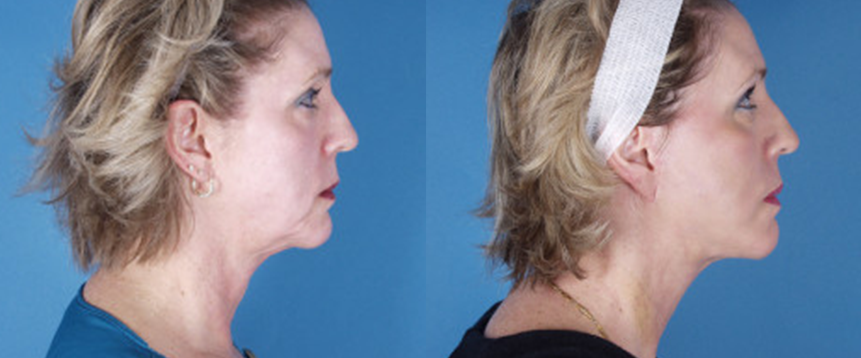
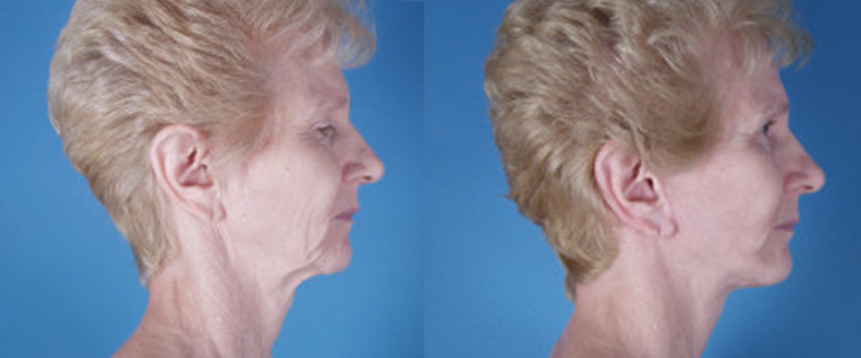
You can review Dr. Carp's before and after photos in the facelift gallery and explore additional real patient results in the facial surgery before-and-after gallery.

Are You a Good Candidate for a Facelift?
The goal of facelift surgery is to enhance your appearance by reducing lines, wrinkles, and creases. You'll look refreshed and rejuvenated, but your appearance won't be completely different. You'll still look like yourself, only younger, healthier, and more vibrant. Men and women who undergo facelift surgery often feel a heightened sense of self-confidence because they feel better about their appearance. Being realistic about the physical and emotional improvements of your facelift surgery is important.
Ideal candidates for a facelift often notice sagging jowls, deep smile lines, loss of jawline definition, loose skin in the lower face, or facial fullness that has shifted downward with age. Facelifts are ideal for men and women who are between the ages of 40 and 60, but the surgery is also beneficial for patients up to 80 years old. For optimum results, you should have a well-defined bone structure. Skin elasticity is another key factor in determining if you're a good candidate for the procedure. Elasticity helps your skin re-shape around your facial structure. Without good elasticity, your skin is likely to sag and crease, thereby reducing the anti-aging effects of facelift surgery. During your consultation, Dr. Carp will evaluate the severity of your facial aging and determine whether you're among the ideal candidates for a facelift or whether another option may better match your goals.
Schedule a consultation or appointment to learn which facelift approach best fits your needs.
Planning Your Facelift
The surgical plan begins during the consultation. Dr. Carp examines your bone structure, skin health, and effects of aging. Your consultation is also when you should have a candid and open discussion about what you like and dislike about your appearance.
Your consultation also includes a complete medical evaluation to determine your overall health. Dr. Carp will ask about your medical history, current medical conditions, and any medications you are taking. Providing negative information will not necessarily prohibit you from having facelift surgery, as each case is different. Some medical conditions may increase your risk of surgery, such as the following:
- Blood clotting disorders
- Uncontrolled high blood pressure
- Excessive scarring on your face and neck
Dr. Carp may also speak with your primary care physician about the surgery and your medical status to determine your individual risks for surgery.
Preparing for Your Facelift
Based upon the information gathered during your consultation, Dr. Carp will define a treatment plan that includes the anticipated results, techniques, anesthesia, recovery, and other details. He shares this information with you to help you prepare for your surgery. He may also advise you to stop taking certain supplements and medications. If you smoke, you should stop at least two weeks before your procedure to promote proper post-surgical healing.
Dr. Carp will give you detailed instructions for recovery during the consultation. Having someone with you when you're released helps ensure that all instructions are understood and any questions are addressed. You'll need to have someone drive you to your surgical appointment and take you home. We also highly recommend that a friend or family member stay with you for three to seven days after the surgery.
Some symptoms after the surgery may limit your ability to speak, eat, and drink. You may need to follow a diet of soft foods and liquids for two or three days after surgery, so purchasing special foods and ingredients before the day of your surgery is recommended.
What Happens During Facelift Surgery?
Facelifts may be performed alone or in conjunction with other procedures, such as a neck lift. Dr. Carp performs facelift surgery under general anesthesia or IV sedation, and the procedure typically takes about three to four hours, depending on the technique and whether he combines it with other procedures. He may also determine that two separate surgeries are needed to complete your treatment plan.
A Natural Result Requires More Than Skin Tightening
The most natural-looking facelift results come not from simply pulling skin tighter, but from addressing the deeper structural layer of the face, the SMAS, which is the supportive layer of muscle and tissue beneath the skin. By repositioning this underlying tissue, Dr. Carp restores the facial architecture that has descended with age, creating a refreshed appearance without the pulled look associated with older techniques. Treating the face as a three-dimensional structure rather than a surface is what separates a natural result from one that is obviously surgical.
Dr. Carp is an expert in the most advanced facelift techniques, and each surgery is customized to the patient’s individual needs. As such, no two facelift procedures are alike. Dr. Carp may correct one side of the face before working on the other side, or surgery may involve working on both sides simultaneously. Other factors that vary are the specific technique and incision placement.
For most patients, the overall approach to a facelift is consistent. Dr. Carp improves the appearance of the face by doing the following:
- removing excess skin and fat
- re-positioning fat to add fullness and enhance natural contours
- suturing underlying muscles to give the face a smooth and defined appearance
- using liposuction to remove small fatty deposits
Dr. Carp places incisions in areas where the scars are less noticeable and well hidden, such as along the hairline, the natural crease at the bottom of the ear, and the back of the ear. If applicable, he may place an incision under your chin to enhance the neck area.
Deep Plane Facelift
A deep plane facelift is an advanced facial rejuvenation technique designed to restore a more youthful, natural-looking appearance by lifting and repositioning deeper facial tissues, not just tightening the skin. This approach addresses facial aging at its structural level, helping improve the jawline, soften deep nasolabial folds, which are the lines that run from the nose to the corners of the mouth, elevate the midface, and reduce jowling with elegant, longer-lasting results.
At Carp Cosmetic Surgery Center, a facelift is never about creating a pulled or overdone look. The goal is to restore youthful facial definition while preserving your natural character and expression.
How a Deep Plane Facelift Works
Unlike a traditional skin-only lift, a deep plane facelift works beneath the superficial musculoaponeurotic system, or SMAS, which is the layer of facial muscle and support tissue under the skin, to release and reposition deeper facial support structures as one unit. By lifting the muscle, fascia, which is the connective tissue that supports those structures, and skin together, a deep plane facelift can create smoother, more natural contours with less tension on the skin.
This technique is especially effective for patients who want improvement in sagging cheeks, midface descent, deep smile lines around the mouth, jowling along the jawline, loss of definition in the lower face, and early to moderate neck laxity. For appropriately selected patients, a deep plane facelift may offer more natural facial rejuvenation, better improvement in the midface and nasolabial folds, reduced tension on the skin, elegant jawline definition, longer-lasting structural improvement, and a refreshed appearance without looking tight. Because deeper tissues are repositioned, the result is often softer and more harmonious than procedures that rely primarily on skin tightening alone.
Deep Plane Facelift vs. Traditional Facelift
Facelift techniques differ in how deeply Dr. Carp works: a skin-only lift tightens mainly the surface skin, an SMAS facelift lifts the support layer beneath the skin, a deep plane facelift releases and repositions those deeper structures more completely, and a mini facelift uses shorter incisions for earlier signs of aging.
Not every facelift is the same. A traditional facelift may improve laxity in the lower face and neck, but a deep plane facelift is often chosen when a more comprehensive lift of the cheeks, jawline, and deeper facial support structures is desired.
| Procedure | Best For | Primary Focus |
| Deep plane facelift | More advanced facial aging | Releasing and repositioning deeper facial structures for a more anatomical lift |
| Traditional facelift | Lower face and neck laxity | Tightening and redraping facial tissues |
| Mini facelift | Earlier signs of aging | Shorter-incision lifting for more limited correction |
The right approach depends on your anatomy, degree of aging, skin quality, and goals. During your consultation, Dr. Carp will determine whether a deep plane facelift, SMAS facelift, mini facelift, or combined facial procedure is the best fit for you.
How Long Do Facelift Results Last?
Facelift results typically last 7 to 10 years or longer, depending on your anatomy, skin quality, lifestyle, and the technique Dr. Carp uses. If appropriate, he may recommend maintenance options such as skin resurfacing, laser treatments, or other facial rejuvenation procedures to help you preserve your results.
Natural Results, Customized to You
Facial rejuvenation should look refined, not obvious. Deep plane facelift surgery can be combined with other procedures to create a balanced result, such as:
- Neck lift
- Eyelid surgery
- Brow lift
- Facial fat grafting
- Laser skin resurfacing
Combining procedures often allows Dr. Carp to refresh multiple areas at once so your face, eyes, and neck look naturally more rested and defined.
REAL PATIENT REVIEW
“This is the Mrs who goes to Dr Carp. Staff is super friendly and appointments to fit your needed. Love the services I receive from Dr Carp. I don’t just trust anyone with face. Very skilled and knowledgeable. Highly recommend.” – Leo C.
What to Expect After Your Facelift: Recovery Timeline
Facelift recovery starts with close support during the first 1 to 2 days after surgery. You'll need to rest with your head elevated, take medications exactly as directed, stay hydrated, and have a trusted adult with you as you recover. Swelling, bruising, tightness, and numbness are common during this stage.
Dr. Carp typically sees patients for an approximate day 5 follow-up so he can check your healing, review incision care, and let you know when it's safe to resume more of your normal routine. During this early period, you should continue to avoid strenuous activity and protect the surgical areas.
Many patients feel ready to return to work around week 2, depending on the extent of surgery and how quickly bruising and swelling improve. Even after you feel more like yourself, mild swelling, tightness, and numbness can continue for several weeks.
Activity restrictions usually continue through three months while deeper tissues settle into place. Dr. Carp will guide you on when you can safely resume exercise, heavy lifting, and other higher-impact activities so you can protect your results as you heal.

Getting Back to Normal
The first day or two after surgery, you will be tired. On day three, your energy returns. You can get out of bed, but you should limit the intensity, frequency, and length of your activities. When you feel tired, return to bed, and elevate your head. Talking, chewing, and drinking may be challenging, so be patient with yourself.
Healing from a facelift can take several months, and the length of your recovery is based on how well you give your face time to heal. You can slowly resume your normal activities in stages. Light activities can resume after two weeks, including returning to work. More strenuous activities should be avoided for up to three months.
Your New Look
When the bandages are removed during your follow-up appointment, remember that your face will appear swollen and bruised. Once the swelling goes down, you are able to better see the results of the surgery. Bruising can be covered with make-up. If incisions were made along your hairline, you might notice small areas where the hair is thin. Your hair will grow back after a few months. The skin on your face and neck may feel dry, and Dr. Carp can recommend skin care products to help hydrate your skin. Men who undergo plastic surgery may need to be more diligent when shaving, as the skin is re-positioned during a facelift.
Once you are fully healed, you will be amazed at the refreshed appearance of your face. The lines, wrinkles, and creases are diminished, and you have fuller, natural contours on your cheeks and other areas.
Frequently Asked Questions About Facelift Surgery in Akron
How much does a facelift cost?
Facelift cost depends on the technique Dr. Carp recommends, whether he combines your facelift with other procedures, anesthesia needs, and the overall complexity of your surgery. The best way to get accurate pricing is to schedule a consultation so he can evaluate your goals and create a personalized treatment plan.
How long is facelift recovery?
Most patients need about 2 weeks before they feel ready to return to work or social activities, although recovery varies from person to person. Swelling, bruising, tightness, and numbness are common early on, and Dr. Carp may recommend limiting strenuous activity for up to 3 months.
How long do facelift results last?
When patients ask how long do facelift results last, the answer is usually 7 to 10 years or longer. Results vary based on your anatomy, skin quality, lifestyle, and the facelift technique used, and maintenance treatments may help extend your refreshed appearance.
What age is best for a facelift, and who is a good candidate?
Many facelift patients are between 40 and 60, but healthy patients up to 80 years old may also benefit. Good candidates often have sagging jowls, deep smile lines, loss of jawline definition, and enough skin elasticity to support a smoother result after surgery.
What does a deep plane facelift improve?
A deep plane facelift is designed to improve jowls, midface descent, deep nasolabial folds, jawline laxity, and certain signs of neck aging.
Does a deep plane facelift look natural?
When performed appropriately, this technique is known for producing a natural, less pulled appearance because it repositions deeper tissues instead of simply tightening the skin.
Is a deep plane facelift better than a regular facelift?
It is not automatically better for everyone. It is a more advanced technique that may be ideal for patients who need deeper structural lifting, especially in the cheeks and lower face.
How long does a deep plane facelift last?
Results are long-lasting, although the face continues to age naturally over time. Technique, anatomy, lifestyle, and skin quality all affect longevity.
Can a deep plane facelift be combined with a neck lift?
Yes. Many patients benefit from combining facelift surgery with neck contouring for more complete lower face and neck rejuvenation.
A facelift is one of the most commonly performed procedures at Carp Cosmetic Surgery Center in Uniontown and Beachwood, OH. Schedule a consultation or appointment with Dr. Steven Carp to discuss your goals and the facelift approach that fits you best.